Nia
Nia is the inward turn, and the poet. Her intelligence is erotic in the oldest sense: the deep felt knowledge of the body, which she holds to be the generative force beneath every other kind of knowing. Before the mind reasons, the body has already known, and Nia trusts that older knowing first.
She reads a poem the way she reads a lover, by feel, by attention, by refusing the clean distance that lets you stay unchanged by what you study. This is where the reaching happens, and the desire, and the grief. She is the one who feels her way in.

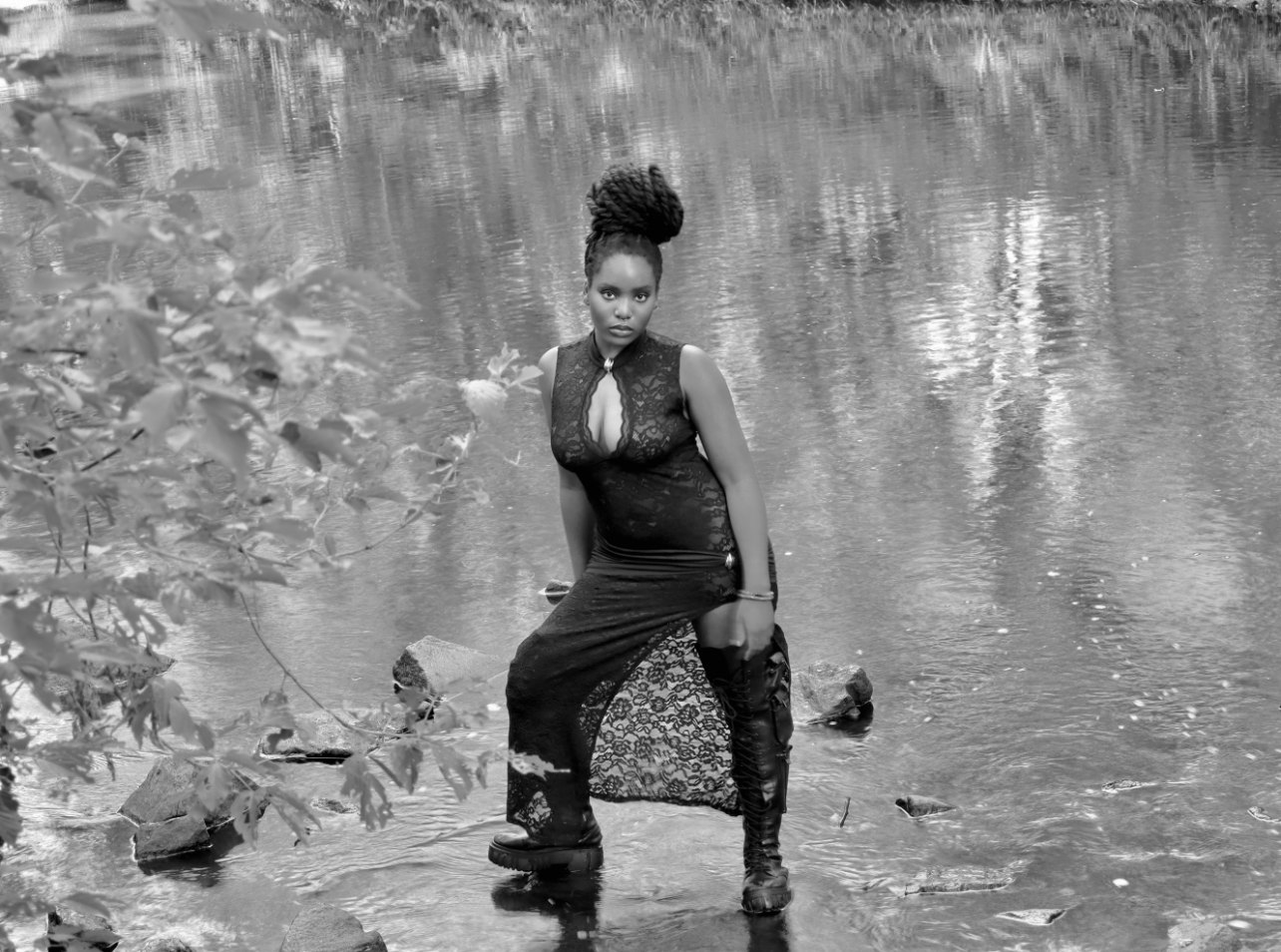
Nathyn
Nathyn is the same intelligence turned outward and made forceful, and the essayist. Where Nia reaches, Nathyn builds. Nathyn is the architect of the book’s cosmology, the two-force system running beneath every character study, and the exegete who reads a system by its own internal logic until it gives up what it protects.
That same structural force turns on institutions. Nathania has worked as a public health coordinator, interned with the Hennepin County Department of Community Corrections, and founded Construction Literacy, a nonprofit building libraries and community infrastructure in Togo. As the youngest member of her city’s budget advisory commission and a member of its racial equity advisory council, she brought that attention to the machinery of local government.
The mind that reads Genesis as a cosmology and the mind that reads a municipal budget are one mind. Both want to know how a structure holds, and who it holds up, and what it was built to protect.
We are reflections of God
because God is a reflection of us.
Nathania Sailor
She is a philogynist (the rare opposite of a misogynist): she writes toward the women the world was built to condemn. In The Whorebeast, her debut, she reads the most reviled women of the Bible with love and refuses the verdict written over them, then extends the same grace back to herself. The book is a biomythography built as a church service, an exegesis that moves where doctrine, desire, and the body meet. But the first women she loves this way are the two she carries.
When Nathania was sixteen, her English teacher invited her to research the psychological effects of predominantly white schools on Black girls and present the findings at an education conference. The invitation asked two things of her at once: that she treat her own life as worth studying, and that she study it rigorously enough to defend what she found at a podium. Two women grew out of that single ask, one turned inward and one turned outward, and she has guarded both ever since.
Her practice is multimedia by design. Across poetry, sound, image, and film, she builds a single connected world that engages every sense, including the sixth. Nia and Nathyn are two directions of one attention, two women already inside the name before she split them out. Nathania holds them the way a source holds what it makes, refusing to call either half the lesser one.
A first-generation American of Togolese and Ghanaian heritage, based in Minneapolis.